Sunday, January 4, 2015

1.4.15 Today, and Long Ago: Stories

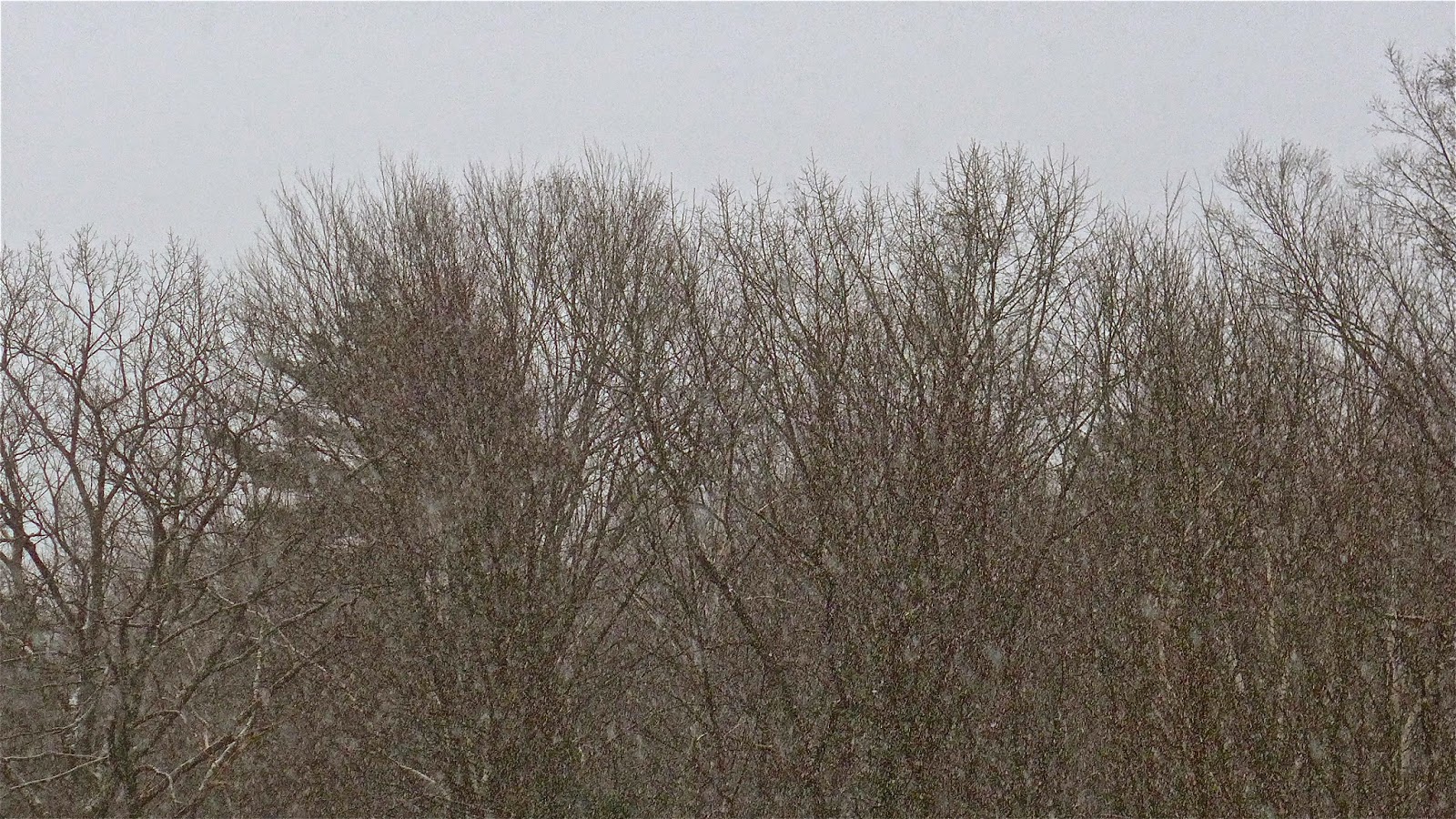
 Last night the snowfall had such translucence to it, swirling about with the gusty winds. The dogs delighted in the change as they went outside,


 Shiva peacefully standing for so long, contemplating the sensations; the smells from distant places, lifting her nose now and then to catch a particular scent. We stood for so long, she in such peace and enjoyment; me standing by her, in the moment, watching the distant shadows of the forest, of the stands of trees far across the fields, of the dance of the snow as it fell.

 Dante had his turn, to come out and prance and race about in his young pup delight, catching thrown snowballs in the air, racing up to tease me with a half- proffered ball, and then running off again to play play in the snow.


 Oh, it reminds me both of all the interminable work and care and thought and love being a parent involved, and yeah, how there are seasons in all of our lives for whatever we involve ourselves in. 


 Once one of my kids asked me "Why do adults sit down all the time?" Just blew me away, because, while I wasn't watching, it happened to me, too. I sat down all the time. Kids don't . Or didn't used to, before machines and parents IPads and phones and such. They raced about and got bored and invited friends over if allowed and weren't in a neighborhood.

 When we lived in North Amherst, Cowls Lumber was next door, and they would plow all their snow into an enormous pile, right next to our huge paved driveway.


 And then all the neighborhood kids would come slide and dig and tunnel and hurt themselves and come in crying and reddened and cold and needing warming and drinks and snacks and drying of various things, and then, as fast as they could, out they went again, climbing the mountain of snow, calling and chasing and roaring and proclaiming things in LOUD LOUD voices. I would stand in the doorway, amazed at how important YELLING is for kids. And struggling through the snow. Having a hill they really really want to get to the top of. Over and over again.
 Often I would bring them and our snow-tubes (less control, fewer coccyx injuries and whiplash) to Hospital HIll, which had a big sign saying no sliding, we all thought for liability, which makes sense, being the ex-State Mental Hospital and all. But truly, the very best hill around. 

 It was exhausting, getting them ready and all the whining about boots and socks not feeling right and covering all the little skin places so they could last the effort of readying and snack prep and dressing them and driving them and blowing up tubes and picking up friends. But once we were there, there were just a million kids and parents, having a great old time. And at certain ages they would need you to sit and slide with them and then trudge back up the hill in the freezing cold and snow and all. 

 Or link hands between tubes, laughing and screeching all of us, as we slid fast down the hill to the end of the line, where the tubes would slowly come to a stop, and the cry would be "AGAIN! AGAIN!" til they could hardly walk, and were on the verge of tears,and you foresaw this, from suffering through the past, and got them the heck out of there and home before all the meltdowns, helping pull off all the sopping wet, frozen things and getting them all warm again while heating up Rice Milk and Carob Cocoa (so they wouldn't get sick a lot, and zip madly about the house from the chocolate) and marshmallows, and then everyone would cuddle up in warm blankets and recount. The adventures. At those times, the adults did not sit; that is for sure.


 And as they grew, it would be a packed car with sliding things tied to the top, and kids sharing seat belts, or mine stuffed in the way back while I seat-belted other's children, and off we would go, me keeping watch as they launched themselves and crashed into each other and the boys and the girls practiced being friends and then thinking just a bit about the difference...between boys and girls. 

And I'd have hot cocoa by then, with whipped cream and thick paper cups, so they could come up and have a break, older now, taller, sweet sweet young people, jostling each other and tripping the other and joking around while I laughed and threatened and admonished and kept them in line.
It was glorious. And then pack them all back in, somehow, things tied once again to the top, driving about the town, dropping off one kid as I watched for them or the parent to wave to let me know a parent was home, and then another, all pre-cell-phone-era, and then finally my own would be exhausted and cranky and fighting and sobbing and complaining and cranky, but I knew. 


I knew how it went, and how nice it is to be a kid, and get to express all that stuff. Eventually everything would get put away and they would be warm and dry and settled on the sofa with a dog or two, telling stories about the day and laughing, while I picked things up and made dinner and thought carefully on how life moves.


How it moves and changes and carries us along, in time. In years. In changes, and ages. How exhausting and hard and precious and remarkable and completely lovely it can be, all of a moment. 


Now I look out on the day, the rain having come and covered all with this magical glaze, that shines and weighs everything down a bit, as the full fledged neighborhood birds show up for the first time, cold and snow bringing some finality to the fall that is gone now, and the winter that has certainly begun.


1.3.15 "When Did You Stop?"

Photo: "In many shamanic (ie wise) societies, if you came to a medicine person complaining of being disheartened, dispirited, or depressed, they would ask  four questions: 
When did you stop dancing? 
When did you stop singing?
 When did you stop being enchanted by stories? 
When did you stop finding comfort in the sweet territory of silence?" 
Gabrielle Roth
(photo- Eagle Sanctuary, Hockanum Road, 3 days ago)

"In many shamanic societies, if you came to a medicine person complaining of being disheartened, dispirited, or depressed, they would ask four questions: 
When did you stop dancing? 
When did you stop singing?
When did you stop being enchanted by stories? 
When did you stop finding comfort in the sweet territory of silence?" 
Gabrielle Roth

(photo- Eagle Sanctuary, Hockanum Road, 3 days ago)


1.3.15 Ah, Snow. That Which Warmeth The Hearts and Minds of Inveterate New Englanders

Photo: Ah, snow. That which warmeth the hearts and minds of inveterate New Englanders. 
(Or rather, those who have homes and heat and food and cars and washing machines and jobs and...and....). 
Lovely out, til it becomes 50 tomorrow and we are sunken in rains.

Ah, snow. That which warmeth the hearts and minds of inveterate New Englanders. 
(Or rather, those who have homes and heat and food and cars and washing machines and jobs and...and....). 
Lovely out, til it becomes 50 tomorrow and we are sunken in rains.

1.4.15 Medical Marijuana: Some Thoughts

Photo: Medical Marijuana: Some thoughts
Medical Marijuana is a confusing concept for many. 
     In its infancy, in terms of understanding, research ( virtually none except in other countries) , and delineation between soothing symptoms of many conditions including chronic debilitating pain and PTSD, and the probable capacity to actually change physiology and heal many conditions , 
     and prevent others ( epilepsy , cancers, certainly the realm of ocular conditions), 
     there remains great confusion as to the ( bad evil ) stoner type use of marijuana ,    
     and the many tiny, often oral ( to protect the respiratory system, for goodness sake), vaporized, topical etc modes of use of VERY SPECIFIC strains.....   
     That  , like any herb, combine in a unique fashion with each individual 's physiology, brain chemistry, and challenges to support problematic conditions .
     Thus, many people utilizing medical marijuana who are not in severe pain use small enough oral amounts to stabilize physiology while avoiding being stoned . 
Medical Marijuana is used in as many ways as there are people , to address, modulate , and at times heal conditions. 
     Another initial erroneous assumption that even trauma-specializing therapists I know don't understand, is that it's not all cut and dried, with the CBD compounds being 'good' and the THC compounds being 'bad. They are synergistic compounds if the same plant . 
     Here is a little , incomplete primer on Medical Marijuana use for PTSD. 
     But remember: in the near future we are going to observe a revolution of research , intricacy , and applications , now that the tide is finally turning . 
     As I mentioned before , in the 70's I was simultaneously trained and worked as a Drug Treatment Counselor by the DMH about the complete evil nature of marijuana   , and by MSW's at a counseling center I volunteered at, who trained us about the politicalization of marijuana, while teaching us the actual known facts. 
     Like any object of racism , classism, or Prohibitions, and we have had marijuana prohibition now for awhile, ever since our political fathers began to notice the nice little white kids going to listen to amazing jazz and blues and discovering pot. 
     PTSD is characterized in adults by fear, anxiousness, night terrors, night sweats, night crying, rapid heartbeat, flashback, scary thoughts, guilt, depression, emotional numbness, emotional outburst, rage, social disassociation and being easily startled. 
     In the research I have read, PTSD has been linked to inflammation in the brain as well as a misfiring or under/over production of different brain chemicals that affect one’s ability to let go of traumatic memories.  
     While PTSD is generally considered an anxiety disorder, I hypothesize that it is also closely associated with adrenal exhaustion.
     Adrenal exhaustion occurs when the “fight or flight” response is constantly engaged.  This response is in large part controlled by the tiny little adrenal glands that sit on top of the kidneys.  
     The hormones they produce are intended to help the body manage stressful situations. When the hormones they produce are depleted, other hormones produced in the body and brain try to support the adrenals by doing the job adrenaline was supposed to do.  
     Over time if the body is unable to rest and recharge, the adrenal glands become exhausted.  And so will the other supporting hormones from the pituitary, hypothalamus and the thyroid glands. 
     An imbalance in brain chemistry will result simultaneously.  That ultimately leads to a variety of symptoms including fatigue, headaches, heart palpitations, addiction, weight gain or loss, poor immunity, lack of quality sleep, physical pain, depression and more.  
For more information about adrenal exhaustion visit http://.         www.adrenalfatigue.org.
     One of the points researchers make is that cannabis works with our own endocannabinoid system to bring homeostatis or balance back to the mind and body. 
     The endocannabiniod system (internal system that produces compounds that mimic those in the marijuana plant)  is an intricate system present throughout the entire human body and brain that helps regulate every major physiological function including  the regulation of pain, temperature control, memory and inflammation. 
When something goes wrong in the body our endocannabinoid system goes to work to try to right the wrong and bring the body back into balance. 
     In the case of PTSD, the endocannabinoid system which usually helps us forget or deal with painful memories, is somehow overloaded and unable to do that. 
     Because the person ( or animal) is unable to get space from their trauma, they are unable to relax and interact normally releasing a cascade of detrimental stress chemicals in the body. 
     Medical cannabis helps modulate these memories and stimuli enough that the patient can make sense of the memories, begin to integrate them in a healthier and more emotionally sustainable way, and relax the body enough to begin the healing process.
While cannabis may not work for everyone with PTSD, it deserves serious consideration 
........as a piece of an integrated PTSD treatment including counseling, meditation, exercise, diet, nutritional supplementation and cannabis.  
     The problems associated with PTSD are as unique as the individuals who suffer from it.  
     Cannabis for PTSD treatment is not a one-size-fits all, but no treatment is
After researching alternative treatments one veteran discovered that cannabis was an effective substitute to the methadone he had been prescribed for severe post-war pain from injuries, and PTSD . 
      He decided to give it a try. The effects were felt immediately as his pain levels were much better managed, he was able to spend time with his family again, and he no longer needed the methadone that took his quality of life.
     It is important to note that when this person  began his cannabis regimen he had many lesions on his brain.    
     Those lesions have steadily been shrinking with the 
continued use of cannabis.  Yet, it was (and still is) his doctor’s responsibility to steer him in another direction
     Dr. Mechoulam writes in his post on the Veteran for Medical Marijuana page:
"So what should all this mean to the individual? Anecdotal evidence says by and large the use of therapeutic cannabis provides a significant improvement in quality of life both for those suffering from this malady and for their family and friends. 
Whether or not this is taking the fullest advantage possible of the eCB system in the treatment of PTSD is yet to be seen. 
Mostly the use of cannabis and THC to treat PTSD in humans appears to provide symptomological relief at best. 
In and of itself, there is nothing wrong with symptomological relief. That’s what taking aspirin for a headache, a diuretic for high blood pressure, opiates to control severe pain, or olanzapine for rapid-cycling mania is all about. 
We do have the potential, however, to do better than just treating symptoms of PTSD via activation of the cannabinoid receptors. 
With the right combination of extinction/habituation therapy and the judicious administration of a FAAH inhibitor like KDS-4103 we have the potential to actually cure many cases of PTSD. 
For the time being though, symptomological treatments are all we have for more generalized anxiety and depression disorders.
http://mychronicrelief.com/cannabis-ptsd-treatment/

     Medical Marijuana is a confusing concept for many.
     In its infancy, in terms of understanding, research ( virtually none except in other countries) , and delineation between soothing symptoms of many conditions including chronic debilitating pain and PTSD, and the probable capacity to actually change physiology and heal many conditions ,
     and prevent others ( epilepsy , cancers, certainly the realm of ocular conditions),
     there remains great confusion as to the ( bad evil ) stoner type use of marijuana ,   
     and the many tiny, often oral ( to protect the respiratory system, for goodness sake), vaporized, topical etc modes of use of VERY SPECIFIC strains.....  
     That  , like any herb, combine in a unique fashion with each individual 's physiology, brain chemistry, and challenges to support problematic conditions .
     Thus, many people utilizing medical marijuana who are not in severe pain use small enough oral amounts to stabilize physiology while avoiding being stoned .
Medical Marijuana is used in as many ways as there are people , to address, modulate , and at times heal conditions.
     Another initial erroneous assumption that even trauma-specializing therapists I know don't understand, is that it's not all cut and dried, with the CBD compounds being 'good' and the THC compounds being 'bad. They are synergistic compounds if the same plant .
     Here is a little , incomplete primer on Medical Marijuana use for PTSD.
     But remember: in the near future we are going to observe a revolution of research , intricacy , and applications , now that the tide is finally turning .
     As I mentioned before , in the 70's I was simultaneously trained and worked as a Drug Treatment Counselor by the DMH about the complete evil nature of marijuana   , and by MSW's at a counseling center I volunteered at, who trained us about the politicalization of marijuana, while teaching us the actual known facts.
     Like any object of racism , classism, or Prohibitions, and we have had marijuana prohibition now for awhile, ever since our political fathers began to notice the nice little white kids going to listen to amazing jazz and blues and discovering pot.

    " PTSD is characterized in adults by fear, anxiousness, night terrors, night sweats, night crying, rapid heartbeat, flashback, scary thoughts, guilt, depression, emotional numbness, emotional outburst, rage, social disassociation and being easily startled.
     In the research I have read, PTSD has been linked to inflammation in the brain as well as a misfiring or under/over production of different brain chemicals that affect one’s ability to let go of traumatic memories. 
     While PTSD is generally considered an anxiety disorder, I hypothesize that it is also closely associated with adrenal exhaustion.
     Adrenal exhaustion occurs when the “fight or flight” response is constantly engaged.  This response is in large part controlled by the tiny little adrenal glands that sit on top of the kidneys. 
     The hormones they produce are intended to help the body manage stressful situations. When the hormones they produce are depleted, other hormones produced in the body and brain try to support the adrenals by doing the job adrenaline was supposed to do. 
     Over time if the body is unable to rest and recharge, the adrenal glands become exhausted.  And so will the other supporting hormones from the pituitary, hypothalamus and the thyroid glands.
     An imbalance in brain chemistry will result simultaneously.  That ultimately leads to a variety of symptoms including fatigue, headaches, heart palpitations, addiction, weight gain or loss, poor immunity, lack of quality sleep, physical pain, depression and more. 
     For more information about adrenal exhaustion visit http://.         www.adrenalfatigue.org.
     One of the points researchers make is that cannabis works with our own endocannabinoid system to bring homeostatis or balance back to the mind and body.
     The endocannabiniod system (internal system that produces compounds that mimic those in the marijuana plant)  is an intricate system present throughout the entire human body and brain that helps regulate every major physiological function including  the regulation of pain, temperature control, memory and inflammation.
When something goes wrong in the body our endocannabinoid system goes to work to try to right the wrong and bring the body back into balance.
     In the case of PTSD, the endocannabinoid system which usually helps us forget or deal with painful memories, is somehow overloaded and unable to do that.
     Because the person ( or animal) is unable to get space from their trauma, they are unable to relax and interact normally releasing a cascade of detrimental stress chemicals in the body.
     Medical cannabis helps modulate these memories and stimuli enough that the patient can make sense of the memories, begin to integrate them in a healthier and more emotionally sustainable way, and relax the body enough to begin the healing process.
     While cannabis may not work for everyone with PTSD, it deserves serious consideration
........as a piece of an integrated PTSD treatment including counseling, meditation, exercise, diet, nutritional supplementation and cannabis. 
     The problems associated with PTSD are as unique as the individuals who suffer from it. 
     Cannabis for PTSD treatment is not a one-size-fits all, but no treatment is
After researching alternative treatments one veteran discovered that cannabis was an effective substitute to the methadone he had been prescribed for severe post-war pain from injuries, and PTSD .
      He decided to give it a try. The effects were felt immediately as his pain levels were much better managed, he was able to spend time with his family again, and he no longer needed the methadone that took his quality of life.
     It is important to note that when this person  began his cannabis regimen he had many lesions on his brain.   
     Those lesions have steadily been shrinking with the
continued use of cannabis.  Yet, it was (and still is) his doctor’s responsibility to steer him in another direction
     Dr. Mechoulam writes in his post on the Veterans for Medical Marijuana page:
"So what should all this mean to the individual? Anecdotal evidence says by and large the use of therapeutic cannabis provides a significant improvement in quality of life both for those suffering from this malady and for their family and friends.
Whether or not this is taking the fullest advantage possible of the eCB system in the treatment of PTSD is yet to be seen.
     Mostly the use of cannabis and THC to treat PTSD in humans appears to provide symptomological relief at best.
     In and of itself, there is nothing wrong with symptomological relief. That’s what taking aspirin for a headache, a diuretic for high blood pressure, opiates to control severe pain, or olanzapine for rapid-cycling mania is all about.
     We do have the potential, however, to do better than just treating symptoms of PTSD via activation of the cannabinoid receptors.
     With the right combination of extinction/habituation therapy and the judicious administration of a FAAH inhibitor like KDS-4103 we have the potential to actually cure many cases of PTSD.
     For the time being though, symptomological treatments are all we have for more generalized anxiety and depression disorders."

http://mychronicrelief.com/cannabis-ptsd-treatment/